August 2026 Payroll Compliance Checklist: 10 Payroll Mistakes HR Teams Must Check After ITR Filing
Published by Akash
PublishedAug 5, 2026
Last UpdateAug 6, 2026
Share Article
FAQ's
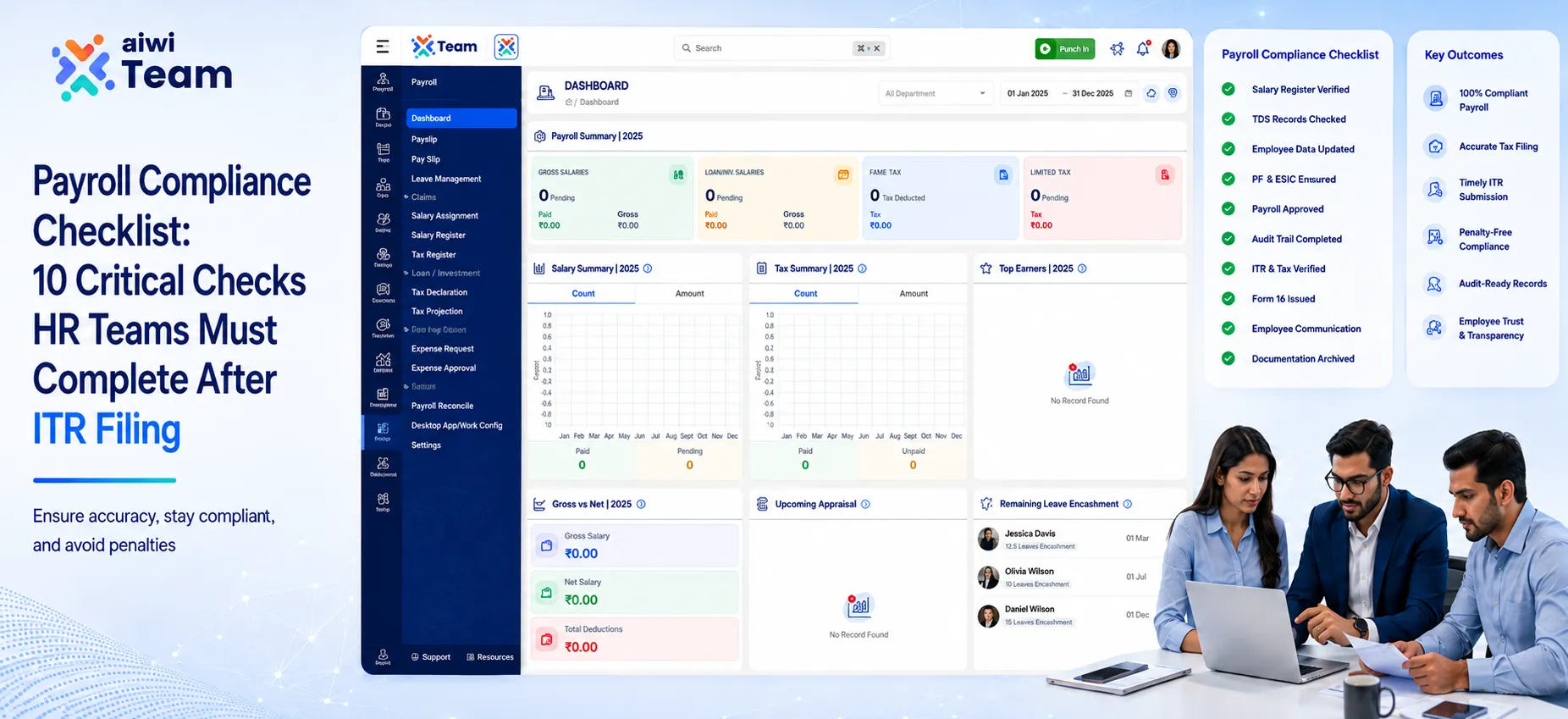
After employees complete their ITR filing, HR and payroll teams should review salary registers, TDS calculations, employee master data, EPF and ESIC contributions, salary revisions, variable pay, attendance records, payroll adjustments, and accounting reconciliations. A structured payroll compliance checklist helps identify discrepancies early and keeps payroll records accurate.
Payroll reconciliation is the process of comparing payroll records with attendance, salary structures, tax deductions, statutory contributions, bank payment records, and accounting entries to ensure employees are paid accurately. Regular reconciliation helps reduce payroll errors, improve compliance, and maintain audit-ready records.
August is a practical time for payroll reconciliation because many employees have completed their Income Tax Return (ITR) filing. Reviewing payroll during this period helps HR teams identify TDS mismatches, salary discrepancies, outdated employee records, and payroll processing errors before year-end reporting and audits.
No. August is not a statutory payroll compliance deadline in India. However, many organizations conduct an internal payroll review after the ITR filing season to verify payroll data, statutory deductions, employee records, and payroll documentation before the second half of the financial year.
The most important payroll compliance checks include salary register verification, payroll reconciliation, TDS review, employee master data validation, EPF and ESIC contribution checks, salary revision verification, bonus and incentive review, Full & Final settlement validation, payroll accounting reconciliation, and maintaining a complete audit trail.
HR teams should review payroll registers, salary registers, attendance records, leave records, employee master data, salary revision approvals, TDS working sheets, EPF and ESIC records, bank payment reports, Full & Final settlement documents, payroll approval logs, and payroll correction records to ensure payroll accuracy and audit readiness.
Yes. An HRMS platform can centralize employee records, attendance, leave management, payroll workflows, approval processes, and document management. While HRMS software improves accuracy and operational efficiency, HR and finance teams must still perform compliance reviews and approve payroll before processing.
A payroll compliance checklist provides HR and payroll teams with a structured process to verify salary calculations, tax deductions, statutory contributions, employee records, approvals, and payroll documentation. It helps reduce payroll errors, improve compliance, strengthen audit readiness, and ensure payroll processes remain accurate throughout the financial year.
Take your team to the next level. Try Team HRMS and see the difference yourself.


 © 2026 AIWI. All Rights Reserved.