


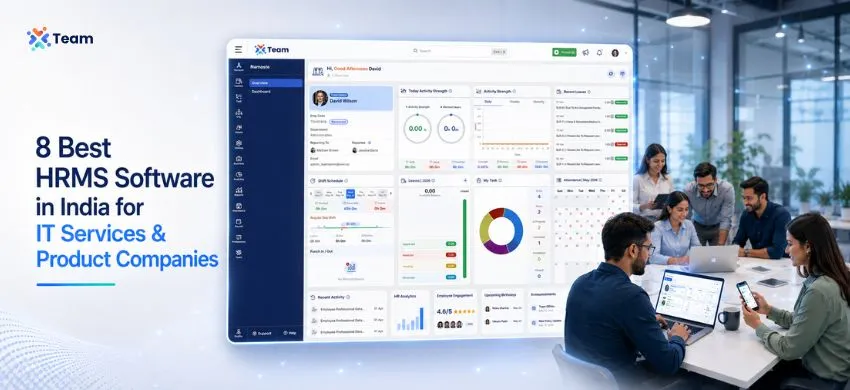
The Indian IT industry continues to grow rapidly, with thousands of software development companies, SaaS startups, technology consulting firms, cloud service providers, AI companies, fintech organizations, and enterprise software businesses hiring skilled professionals across remote, hybrid, and office environments.
As organizations scale from 20 employees to hundreds or even thousands, managing HR operations manually becomes increasingly difficult. Tracking employee attendance, managing leave requests, processing payroll, monitoring productivity, coordinating projects, and ensuring compliance require more than spreadsheets and traditional HR practices.
This is where HRMS Software in India has become a business necessity rather than a luxury.
Modern HRMS platforms help IT organizations automate repetitive HR tasks, improve workforce visibility, streamline payroll processing, enhance employee engagement, and provide actionable insights that support better decision-making. Instead of juggling multiple disconnected tools, businesses can centralize workforce operations through a single integrated platform.
For IT services companies, where client delivery timelines, resource utilization, and employee productivity directly influence profitability, investing in the right Workforce Management Software can significantly improve operational efficiency.
Likewise, product-based software companies benefit from centralized employee management, performance tracking, project visibility, and workforce analytics that support continuous innovation and sustainable growth.
However, choosing the right HRMS platform is not always easy. The Indian market offers dozens of solutions, each with different features, pricing models, integrations, and capabilities.
This guide will help IT business owners, HR managers, founders, operations leaders, and technology decision-makers understand:
- What HRMS software is and why it matters.
- Why IT companies require specialized workforce management solutions.
- The essential features every HRMS platform should include.
- How to evaluate the best HRMS software for long-term business growth.
- Which HRMS platforms are among the best choices for IT services and product companies in India.
Whether you operate a startup, a growing software company, or an established enterprise, selecting the right HRMS platform can improve productivity, simplify HR operations, strengthen workforce accountability, and create a better employee experience.
What is HRMS Software?
HRMS Software in India (Human Resource Management System) is a centralized digital platform that helps businesses automate and manage their human resource processes from employee on-boarding to payroll, attendance, performance management, and workforce analytics.
Unlike traditional HR methods that rely on spreadsheets, paperwork, and multiple disconnected applications, an HRMS integrates essential HR functions into a single platform, allowing HR teams and business leaders to manage employees more efficiently.
Modern HRMS solutions are no longer limited to maintaining employee records. They now serve as comprehensive workforce management platforms that improve collaboration, automate workflows, reduce administrative effort, and provide valuable business insights.
For IT companies, where employees often work across multiple projects, departments, locations, and time zones, an HRMS helps maintain consistency, transparency, and operational control.
Core Functions of HRMS Software
A modern HRMS typically includes the following capabilities:
- Employee information management
- Attendance tracking
- Leave management
- Payroll processing
- Time tracking
- Workforce management
- Project and task management
- Shift scheduling
- Performance monitoring
- Reporting and analytics
- Recruitment support
- Document management
These capabilities reduce manual work while enabling HR teams to focus on strategic initiatives such as employee engagement, talent development, and workforce planning.
Why IT Companies Need HRMS Software
The technology industry operates differently from many traditional sectors. Software companies manage knowledge workers, distributed teams, client projects, agile development cycles, remote employees, and highly competitive talent markets. Without an integrated HR platform, managing these complexities becomes increasingly difficult as the organization grows.
1. Managing a Growing Workforce
Startups often begin with fewer than twenty employees.
As the company expands, HR responsibilities grow exponentially.
Businesses must manage:
- New employee on boarding
- Department assignments
- Attendance
- Leave approvals
- Payroll
- Employee documents
- Performance reviews
- Organizational changes
Manual systems become inefficient and increase the risk of administrative errors.
An HRMS centralizes these processes, allowing HR teams to scale efficiently.
2. Supporting Remote and Hybrid Teams
The IT industry has widely adopted remote and hybrid work.
Employees may work:
- From home
- From office
- At client locations
- Across multiple cities
- Across different countries
Managing distributed teams requires better workforce visibility.
Modern IT Workforce Management Software enables organizations to monitor attendance, work hours, productivity, leave, and workforce availability regardless of employee location.
This supports operational continuity while maintaining employee flexibility.
3. Improving Workforce Productivity
Employee productivity directly impacts software delivery, customer satisfaction, and business profitability.
Managers need reliable data to understand:
- Work allocation
- Resource utilization
- Project progress
- Productivity trends
- Team performance
Integrated workforce reporting allows leaders to identify bottlenecks and optimize operations.
Instead of relying on assumptions, management can make informed decisions based on accurate workforce data.
4. Simplifying Attendance Management
Attendance remains one of the most time-consuming HR responsibilities.
Traditional attendance systems often create challenges such as:
- Manual corrections
- Missing entries
- Attendance disputes
- Payroll delays
- Overtime inaccuracies
Modern HRMS software automates attendance tracking through cloud-based systems, biometric integrations, mobile attendance, or location-based check-ins.
This reduces administrative work while improving payroll accuracy.
5. Streamlining Payroll Processing
Payroll is among the most critical HR functions.
Errors can negatively affect employee trust and organizational compliance.
An HRMS simplifies payroll by integrating:
- Attendance
- Leave
- Holidays
- Overtime
- Shift allowances
- Salary structures
Automated calculations reduce manual errors and improve payroll efficiency.
6. Better Project Resource Planning
IT organizations often allocate employees across multiple projects simultaneously.
Without centralized workforce visibility, managers may experience:
- Resource shortages
- Employee burnout
- Underutilization
- Scheduling conflicts
Integrated workforce planning helps organizations balance workloads more effectively while improving project delivery timelines.
7. Stronger Compliance Management
Indian businesses must comply with multiple employment laws and payroll regulations.
An HRMS helps maintain:
- Employee records
- Attendance history
- Leave balances
- Payroll documentation
- Statutory reports
- Audit records
Digital documentation reduces compliance risks while simplifying audits.
8. Better Employee Experience
Today's employees expect digital HR services.
An HRMS allows employees to:
- View attendance
- Apply for leave
- Download salary slips
- Update personal information
- Receive company announcements
- Access HR documents
Self-service capabilities improve employee satisfaction while reducing HR workload.
9. Data-Driven Business Decisions
Modern HRMS platforms generate valuable workforce insights.
Management can monitor:
- Attendance trends
- Employee productivity
- Resource utilization
- Department performance
- Payroll expenses
- Leave patterns
These analytics support strategic decision-making and continuous business improvement.
10. Supporting Business Growth
An HRMS is not just an HR tool—it is a business growth platform.
As organizations expand, centralized workforce management helps them:
- Scale operations efficiently
- Reduce administrative costs
- Improve employee productivity
- Strengthen workforce accountability
- Enhance operational visibility
- Deliver better client outcomes
This makes HRMS software a long-term investment rather than an operational expense.
Key Features of the Best HRMS Software in India
Choosing the right HRMS requires evaluating much more than payroll or attendance.
The Best HRMS Software in India should support the entire employee lifecycle while improving workforce productivity and operational efficiency.
Below are the essential features IT companies should prioritize.
1. Workforce Management
A robust Workforce Management Software should provide centralized visibility into employee availability, workloads, attendance, projects, and workforce performance across departments and locations.
2. Employee Time Tracking
Accurate time tracking enables businesses to measure project hours, billable work, resource utilization, and employee productivity while simplifying payroll preparation.
3. Attendance & Leave Management
Automated attendance and leave workflows reduce manual effort while ensuring accurate records for payroll and compliance.
4. Payroll Management
Integrated payroll processing minimizes errors, saves administrative time, and ensures timely salary disbursement.
5. Project & Task Management
For IT companies, project management capabilities help assign tasks, monitor progress, track deadlines, and improve collaboration across development teams.
6. Employee Monitoring & Productivity Analytics
Responsible employee monitoring combined with workforce analytics provides valuable insights into work patterns, productivity trends, and operational performance without encouraging unnecessary micromanagement.
7. Shift Management
Organizations managing customer support, DevOps, infrastructure monitoring, or global delivery teams require flexible shift scheduling and rotation management.
8. Reporting & Business Analytics
Comprehensive dashboards allow HR managers and leadership teams to monitor workforce performance through real-time reports and data-driven insights.
9. Employee Self-Service Portal
Self-service features empower employees to manage routine HR tasks independently, improving efficiency for both employees and HR teams.
10. Scalability & Cloud Accessibility
The ideal HRMS should support organizations from startups to enterprises while providing secure cloud access from anywhere.
Top 8 HRMS Software in India for IT Services & Product Companies
Every IT organization has different workforce management requirements. A startup with 20 employees may prioritize affordability and simplicity, while a large software enterprise managing thousands of employees requires advanced automation, analytics, compliance, and workforce visibility.
The solutions listed below are among the most recognized HRMS platforms in India for IT services companies, software product companies, SaaS businesses, startups, and growing technology organizations.
1. AIWI Team - Best HRMS Software in India for IT Companies:
If you are looking for an all-in-one HRMS Software for IT Companies that combines HR automation, employee productivity, workforce visibility, project management, and employee monitoring into a single platform, AIWI Team is one of the strongest choices available.
Unlike traditional HR software that focuses only on payroll and attendance, AIWI Team has been designed specifically for modern organizations that manage remote, hybrid, and office-based employees.
It combines HRMS capabilities with workforce intelligence, allowing business owners, HR teams, project managers, and leadership teams to monitor productivity, streamline HR operations, and improve project delivery from one centralized platform.
Best For
- Software Development Companies
- SaaS Businesses
- IT Services Companies
- Startups
- Product Companies
- Digital Agencies
- Consulting Firms
- Hybrid Organizations
- Remote Teams
Core Features
HR Management
- Employee Database
- Organization Management
- Employee Self-Service
- HR Documentation
- Employee Directory
Workforce Management
- Workforce Management Software
- Employee Time Tracking
- Attendance Management
- Leave Management
- Shift Management
- Holiday Management
Productivity
- Employee Monitoring
- Screenshot Monitoring
- Productivity Analytics
- Idle Time Detection
- Real-Time Activity Reports
Project & Task Management
- Project Management
- Task Management
- Client Management
- Project Time Tracking
- Billable Hours Tracking
Payroll
- Payroll Management
- Payroll-ready Attendance Reports
- Overtime Tracking
- Payable Days Calculation
Collaboration
- Company Announcements
- Notes Management
- Reminder & Notification System
Reporting
- Live Dashboards
- Workforce Analytics
- Productivity Reports
- Attendance Reports
- Leave Reports
- Payroll Reports
Why AIWI Team Stands Out
Most HRMS software solutions stop at payroll and attendance.
AIWI Team extends beyond traditional HR by integrating:
- Workforce Productivity
- Employee Monitoring
- Time Tracking
- Project Management
- Task Tracking
- Client Management
- Productivity Analytics
Into one cloud platform.
For IT companies managing developers, designers, QA engineers, project managers, consultants, and remote teams, this significantly reduces software complexity.
Pricing
Visit the official AIWI Team website for current pricing details.
2. Keka HR:
Keka has become one of India's most recognized HRMS platforms.
It is widely adopted by startups and mid-sized organizations because of its clean user interface and strong payroll automation.
Best For
- SMEs
- Startups
- Growing IT Companies
Top Features
- Employee Database
- Payroll
- Leave Management
- Attendance
- Hiring
- Performance Management
- Employee Self-Service
Strengths
- Easy to use
- Strong Payroll
- Modern Interface
Limitations
- Limited workforce monitoring
- Fewer productivity analytics compared with dedicated workforce platforms
3. Darwinbox:
Darwinbox is a comprehensive enterprise HR platform.
Large organizations frequently choose Darwinbox because of its scalability and employee experience features.
Best For
- Large Enterprises
- Corporate Organizations
- Enterprise IT Companies
Features
- Core HR
- Payroll
- Recruitment
- Employee Engagement
- Performance Management
- Workforce Analytics
- Mobile App
Strengths
- Enterprise-grade features
- Large integration ecosystem
Limitations
May be more feature-rich than smaller companies require.
4. factoHR:
factoHR is popular among businesses looking for HR automation combined with payroll and attendance management.
Best For
- Mid-sized Companies
- Manufacturing
- IT Companies
Features
- Payroll
- Attendance
- Leave Management
- Geo Attendance
- Employee Self-Service
- Analytics
Strengths
- Mobile-first experience
- Payroll automation
5. Zoho People (Zoho One):
Zoho People is part of the Zoho business ecosystem.
Organizations already using Zoho CRM or other Zoho applications often choose it for seamless integration.
Best For
- Small Businesses
- IT Companies
- Zoho Ecosystem Users
Features
- Core HR
- Leave
- Attendance
- Employee Database
- Workflow Automation
- Performance Reviews
Strengths
- Easy integration
- Affordable pricing
6. HROne:
HROne focuses on HR automation with payroll, attendance, recruitment, and employee lifecycle management.
Best For
- Mid-sized Organizations
- HR Teams
Features
- Core HR
- Payroll
- Attendance
- Expense Management
- Performance Reviews
- Employee Helpdesk
Strengths
- Good employee experience
- Easy workflows
7. uKnowva HRMS:
uKnowva is an enterprise HRMS platform suitable for organizations with advanced HR requirements.
Best For
- Enterprises
- Large Organizations
Features
- Core HR
- Recruitment
- Attendance
- Workflow Automation
- Asset Management
- Analytics
Strengths
- Enterprise customization
- HR automation
8. greytHR:
greytHR is one of India's oldest HR software platforms.
It remains popular among SMEs because of its payroll and statutory compliance capabilities.
Best For
- SMEs
- Payroll-focused Organizations
Features
- Payroll
- Attendance
- Leave
- Compliance
- Employee Records
- ESS Portal
Strengths
- Payroll expertise
- Compliance management
HRMS Software Comparison Table:
|
Feature |
AIWI Team |
Keka |
Darwinbox |
factoHR |
Zoho People |
HROne |
uKnowva |
greytHR |
|
Core HR |
✅ |
✅ |
✅ |
✅ |
✅ |
✅ |
✅ |
✅ |
|
Attendance |
✅ |
✅ |
✅ |
✅ |
✅ |
✅ |
✅ |
✅ |
|
Leave Management |
✅ |
✅ |
✅ |
✅ |
✅ |
✅ |
✅ |
✅ |
|
Payroll |
✅ |
✅ |
✅ |
✅ |
Optional |
✅ |
✅ |
✅ |
|
Employee Monitoring |
✅ |
Limited |
Limited |
❌ |
❌ |
❌ |
❌ |
❌ |
|
Screenshot Monitoring |
✅ |
❌ |
❌ |
❌ |
❌ |
❌ |
❌ |
❌ |
|
Project Management |
✅ |
Limited |
Limited |
❌ |
❌ |
❌ |
❌ |
❌ |
|
Task Management |
✅ |
Limited |
Limited |
❌ |
❌ |
❌ |
❌ |
❌ |
|
Client Management |
✅ |
❌ |
❌ |
❌ |
❌ |
❌ |
❌ |
❌ |
|
Productivity Analytics |
✅ |
Limited |
Limited |
Limited |
Limited |
Limited |
Limited |
Limited |
|
Shift Management |
✅ |
✅ |
✅ |
✅ |
✅ |
✅ |
✅ |
Limited |
|
Time Tracking |
✅ |
✅ |
Limited |
Limited |
Limited |
Limited |
Limited |
Limited |
|
Remote Workforce Support |
✅ |
✅ |
✅ |
✅ |
✅ |
Limited |
Limited |
Limited |
|
Hybrid Workforce Support |
✅ |
✅ |
✅ |
✅ |
✅ |
Limited |
Limited |
Limited |
Why AIWI Team Is a Smart Choice for IT Services & Product Companies
Selecting an HRMS platform is more than comparing payroll modules or attendance features. Modern IT businesses require a solution that improves workforce productivity, simplifies HR operations, enhances project visibility, and supports long-term business growth.
While many HRMS platforms focus primarily on HR administration, AIWI Team combines HRMS capabilities with workforce management, productivity monitoring, project management, and operational analytics in one centralized platform.
This makes it particularly valuable for IT services companies, SaaS businesses, software product companies, startups, consulting firms, and organizations managing hybrid or remote workforces.
One Platform for Complete Workforce Management
One of the biggest challenges growing IT companies face is using multiple disconnected applications.
For example:
- One software for attendance
- Another for payroll
- A separate project management tool
- Different task management software
- Another employee monitoring platform
- Excel sheets for reporting
Managing multiple systems increases costs, creates duplicate data, and reduces productivity.
AIWI Team eliminates this complexity by bringing everything together within a single platform.
Designed for Modern IT Companies:
Today's IT organizations operate differently than traditional businesses.
Teams often include:
- Software Developers
- UI/UX Designers
- QA Engineers
- DevOps Engineers
- Project Managers
- Product Owners
- Business Analysts
- Customer Support Teams
- Remote Developers
- Freelancers
- Consultants
Managing such diverse teams requires centralized visibility into attendance, work hours, project progress, productivity, and workforce availability.
AIWI Team is built to support these modern workforce requirements.
Comprehensive Workforce Management
Unlike traditional HR software, AIWI Team combines IT Workforce Management Software capabilities with intelligent workforce analytics.
Organizations can monitor:
- Employee attendance
- Time tracking
- Leave balances
- Shift schedules
- Workforce availability
- Project allocation
- Task progress
- Productivity insights
- Team performance
This enables managers to make informed decisions using real-time workforce data.
Built for Remote & Hybrid Teams
Remote and hybrid work have become standard across the technology industry.
AIWI Team helps organizations manage distributed teams through:
- Online attendance
- Time tracking
- Workforce visibility
- Productivity dashboards
- Employee monitoring
- Project collaboration
- Attendance reports
This allows businesses to maintain transparency without creating unnecessary administrative overhead.
Advanced Productivity Monitoring
Understanding productivity is essential for improving business performance.
AIWI Team provides detailed productivity insights through:
- Active work hours
- Time utilization
- Application usage
- Productivity trends
- Team analytics
- Performance reports
Rather than relying on assumptions, managers can make data-driven workforce decisions.
Project & Task Management
IT companies depend on structured project execution.
AIWI Team includes integrated:
- Project Management
- Task Management
- Client Management
- Time Tracking
- Billable Hours Monitoring
This improves collaboration while helping organizations deliver projects on schedule.
HR Automation
Routine HR tasks consume valuable administrative time.
AIWI Team automates:
- Attendance
- Leave approvals
- Holiday management
- Employee records
- Payroll-ready reports
- Organization management
Automation reduces manual effort while improving operational efficiency.
Actionable Business Analytics
One of AIWI Team's strongest advantages is its reporting capabilities.
Decision-makers can access:
- Attendance Reports
- Workforce Reports
- Productivity Reports
- Leave Reports
- Payroll Reports
- Organization Dashboards
Real-time analytics help leadership teams improve planning and resource allocation.
How to Choose the Right HRMS Software
Choosing an HRMS is a long-term business decision. Rather than selecting software based only on pricing, organizations should evaluate how well the platform supports their workforce, business processes, and future growth.
Below is a practical checklist that IT companies can use during the evaluation process.
1. Understand Your Business Requirements
Before comparing vendors, identify your current challenges.
Ask questions such as:
- Are attendance processes manual?
- Is payroll taking too much time?
- Do we manage remote employees?
- Do we require productivity monitoring?
- Are projects difficult to track?
- Do managers lack workforce visibility?
Understanding your business needs makes software selection much easier.
2. Evaluate Core HR Features
Every HRMS should provide:
- Employee Database
- Attendance
- Leave Management
- Payroll
- Employee Self-Service
- Holiday Calendar
These functions form the foundation of workforce management.
3. Consider Workforce Management Capabilities
Growing IT businesses require much more than HR administration.
Look for software that includes:
- Workforce Visibility
- Employee Time Tracking
- Productivity Monitoring
- Shift Management
- Resource Planning
- Reporting
A comprehensive Workforce Management platform provides significantly greater long-term value.
4. Look Beyond Payroll
Payroll alone does not improve productivity.
Businesses should also evaluate:
- Project Management
- Task Management
- Employee Monitoring
- Productivity Analytics
- Reporting
- Dashboards
These capabilities support better operational decision-making.
5. Check Scalability
Your HRMS should grow alongside your business.
Choose software capable of supporting:
- 20 employees
- 100 employees
- 500 employees
- 1000+ employees
Changing HRMS platforms later can be expensive and time-consuming.
6. Prioritize User Experience
Employees interact with HR software regularly.
Choose an intuitive platform that simplifies:
- Attendance
- Leave requests
- Payroll access
- Employee information
- Notifications
Better usability increases employee adoption.
7. Evaluate Reporting Capabilities
Leadership teams require actionable business insights.
A strong HRMS should provide:
- Attendance Reports
- Productivity Reports
- Payroll Reports
- Leave Reports
- Workforce Analytics
Data-driven decisions lead to better workforce performance.
8. Verify Customer Support
Reliable customer support becomes increasingly important during implementation and future expansion.
Consider:
- Onboarding assistance
- Training
- Technical support
- Product updates
- Documentation
Strong vendor support contributes to long-term success
Final Verdict:
The Indian IT industry is becoming increasingly competitive. Businesses must deliver projects faster, manage distributed workforces efficiently, and create better employee experiences while maintaining operational efficiency.
Manual HR processes and disconnected software tools are no longer sufficient for growing technology organizations.
The right HRMS Software in India helps companies automate HR operations, improve workforce visibility, simplify payroll, monitor productivity, and make informed business decisions using real-time analytics.
Whether you're a startup hiring your first employees, a mid-sized IT services company expanding globally, or a product company managing hybrid development teams, investing in the right HRMS can significantly improve operational performance.
Among the leading HRMS platforms available today, AIWI Team stands out by combining HR automation with workforce management, employee productivity tracking, project management, task management, reporting, analytics, and operational visibility within a single cloud-based platform.
Rather than managing multiple disconnected systems, organizations can centralize workforce operations and create a more productive, accountable, and scalable workplace.
If your goal is to improve workforce efficiency while reducing administrative complexity, AIWI Team is a powerful choice for modern IT services and product companies.
